
How Many Restrooms Does a Race Need?
Runner count drives everything, but so does course shape. A loop course lets you reuse the same bank of units at start and finish. An out-and-back or point-to-point race needs separate clusters, which raises your total. For general sanitation ratios, OSHA 1926.51(c) sets 1 toilet for 20 workers on a job site, and while a race is not a construction crew, event planners in Santa Clara use that same math as a starting benchmark before layering in spectator volume. If you are still sizing your event, how many porta potties do I need walks through the runner-to-unit ratio in more detail.
Every race needs at least one accessible unit under ADA Standards section 213.2, which requires 5 percent of a clustered bank, and never fewer than one, to be ADA compliant. That unit needs a 60 inch turning circle per ADA 304.3.1 and a clear route at least 36 inches wide per ADA 403.5.1, so plan your restroom pad on flat, stable ground per ADA 302.1. Races with a VIP tent or sponsor area often add a deluxe flushable porta potty near hospitality, separate from the runner banks. For the full breakdown, see ADA restroom requirements.
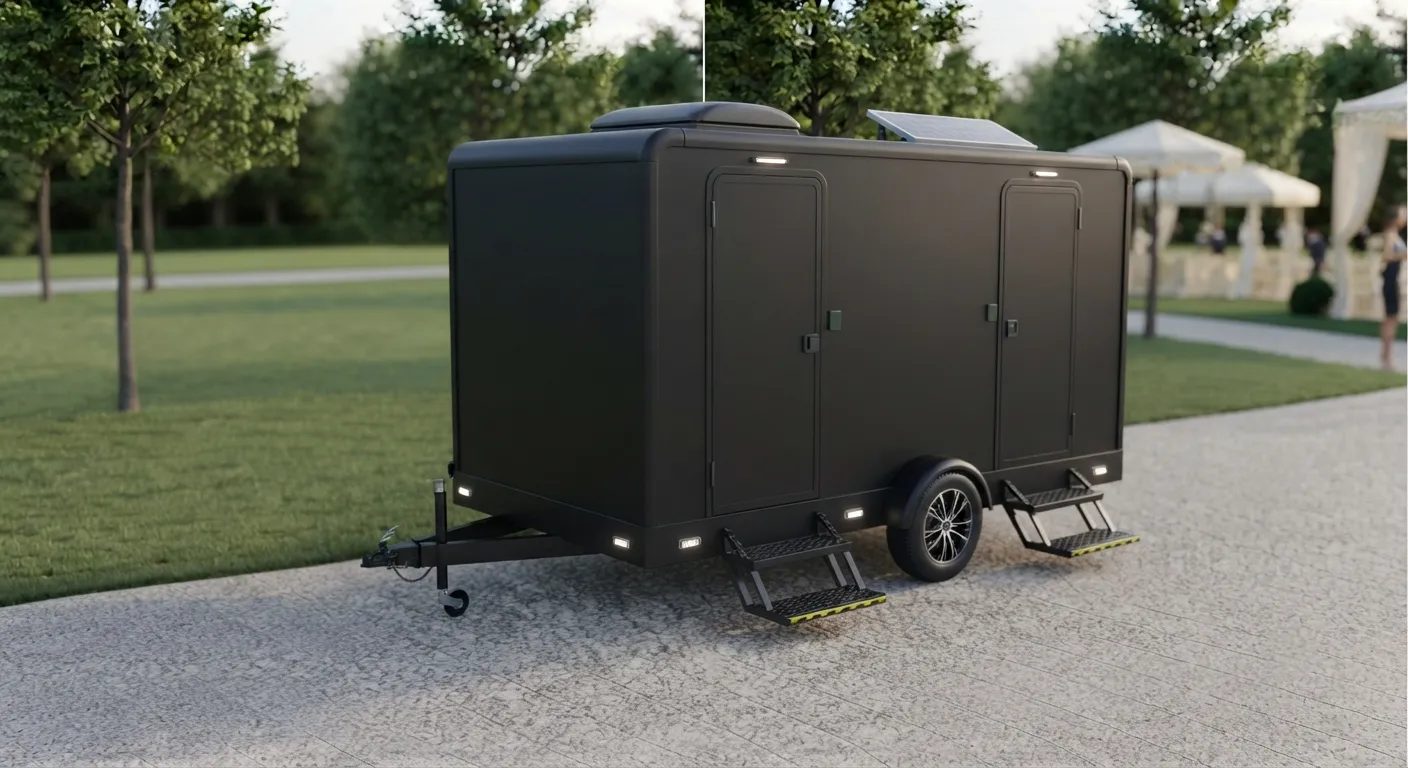
Where Should Restrooms Go on a Race Course?
Restrooms belong at the start corral, at least one mid-course water stop, and the finish chute, spaced so no runner waits in a bottleneck. Our porta potty placement guide covers ground clearance, but for races specifically: keep units off the actual running lane, set back from turns, and clear of any spectator barricades. If you are running crowd control barrier rental or temporary fence rental along the course, restrooms need a gap wide enough for a hand truck to service them without moving fence panels.
Race timing tents and finish-line media setups often run a temporary power pole for scoring equipment and lighting. If your event needs one, brace it properly: guy-wire the pole at three points spaced evenly around the base, anchor each wire to a stake or ballast block outside the walking path, and never rely on the pole standing free in soft turf. A loose pole near a restroom bank is a hazard for runners and staff both. Knowing how to brace a temporary power pole matters as much on a race course as on a job site. Pair that with a light tower rental for early-morning starts or evening finishes, and check temporary power pole for setup specifics.
Delivery trucks need real room. A roll-off or restroom trailer delivery needs about 60 feet of straight clearance behind the truck, which matters if your race finish sits on a narrow street or a park loop road. Santa Clara courses that route through tight residential blocks should plan restroom drop points at the wider staging areas, not mid-block.
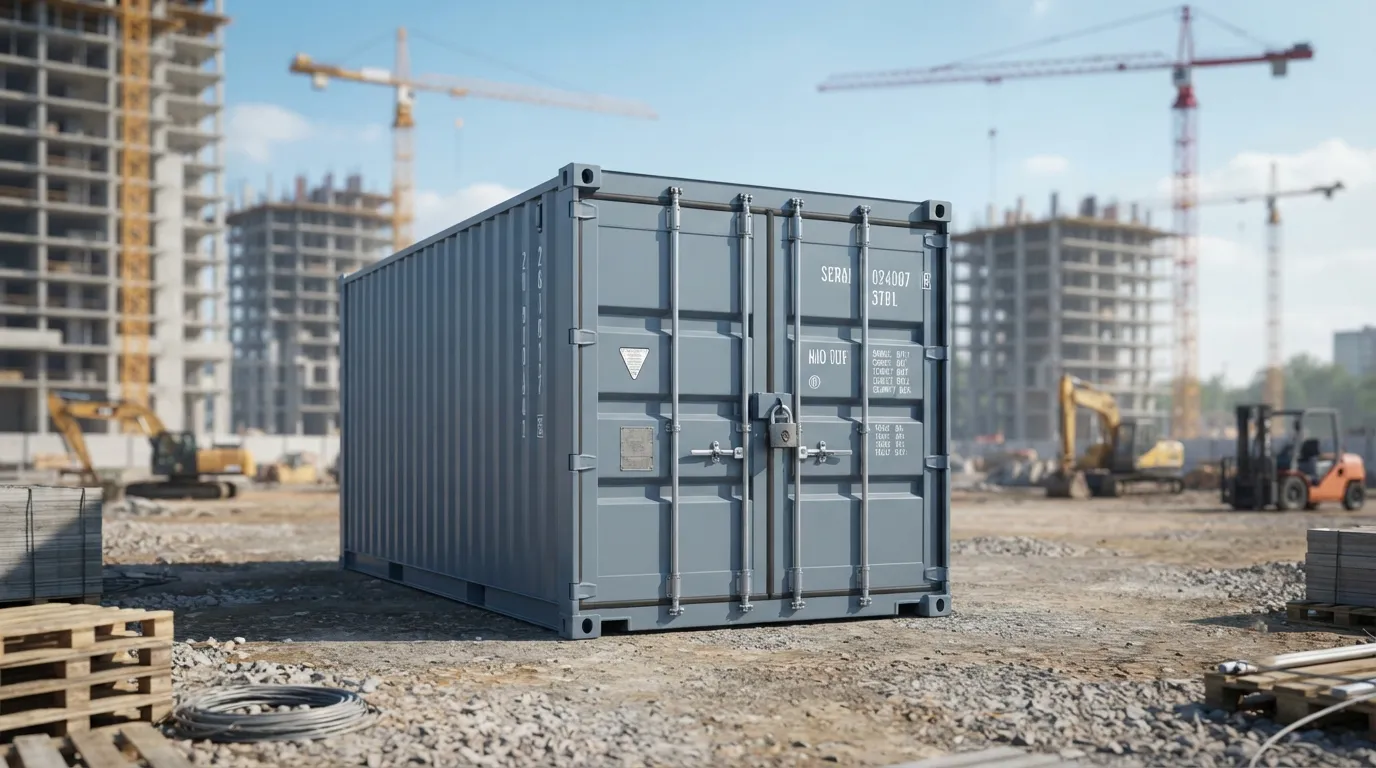
Should We Rent a Restroom Trailer Instead of Standard Units?
For races with runner hospitality, a VIP finish area, or a title sponsor, yes: a restroom trailer reads better in photos and moves people through faster than a bank of standalone units. A 2 stall restroom trailer covers a smaller field, while an 8 stall restroom trailer handles a larger race with multiple waves. Weekend trailer rental runs from about 900 to 3,000 dollars depending on stall count and finish level, so budget early if your race falls on a Saturday. Standard units remain the workhorse for course water stops where speed and volume matter more than finish.
| unit | weekend | week |
|---|---|---|
| standard | 125 to 400 | 130 to 500 |
| ada | 199 to 300 | 120 to 240 |
| trailer | 900 to 3000 | 150 to 1650 |
Races often pair restrooms with a handwashing station rental at aid stations, since 29 CFR 1910.141(d)(2) requires soap and towels, not sanitizer alone, anywhere runners or volunteers handle food or gels. For post-race cleanup, a roll-off dumpster rental staged near the finish keeps cups and gel wrappers from piling up along the last quarter mile. Santa Clara races within driving distance of Cupertino, about 7.1 miles southwest, or Campbell, 6.7 miles south, often coordinate multi-city road closures, so confirm placement in the public right of way with the city before locking your course map.
Frequently asked questions
How far in advance should we book race restrooms?
Book 4 to 6 weeks out for a standard 5K or 10K, longer for a marathon with multiple aid stations. Race weekends compete with weddings and festivals for the same trailer inventory, and event restroom rental fills fast in peak season. Early booking also locks your placement plan before road closure permits get finalized.
Do we need an ADA unit even for a small local race?
Yes. Any clustered bank of portable toilets needs at least one accessible unit under ADA Standards 213.2, regardless of runner count. A field of 150 runners still needs that one unit, with a 32 inch clear door opening per ADA 404.2.3 and reachable controls under ADA 309.4.
Can we get restrooms delivered the morning of the race?
Early morning delivery works if you book ahead, since race organizers often want units in place before course marshals arrive. Confirm your delivery window when you request a quote, and flag any street closures already in effect that morning.
What happens to restrooms during the race, do they get serviced?
Units get checked and restocked based on runner volume, not a fixed schedule mid-race. ANSI/PSAI Z4.3 sets a baseline of one service visit per week for lighter use, but race day volume means most courses schedule a mid-event check at water stops and the finish bank.
Do we need separate restrooms for spectators versus runners?
Larger races benefit from separating the two, especially at the finish line where spectators cluster. Keep spectator units back from the chute so runner flow does not bottleneck. See festival restroom rental for crowd-density spacing that applies to spectator zones too.
Next step
Get a delivery date
Tell us the address, the dates and the headcount. We size the order and confirm the route.