Where should a porta potty go on a job site or a yard?
Pick flat, stable ground first. ADA Standards section 302.1 calls for surfaces that are stable, firm and slip resistant, and that rule matters just as much for a standard unit as it does for an accessible one. Avoid slopes, mud, and loose gravel that shifts under the base. Keep the unit within reach of a service truck: our drivers need a straight run to back up to the door, similar to the roughly 60 feet of clearance a roll-off truck needs behind a roll-off dumpster rental. Leave 36 inches of clear path to the unit, matching the minimum route width under ADA Standards section 403.5.1, so wheelchairs and hand trucks both move freely. On a construction site, park the unit near the work zone but outside swing radius of equipment, and check OSHA 1926.56(a) if the area runs low on natural light after dusk. For most residential jobs, our home renovation porta potty customers just need a spot near the driveway that stays out of the way of contractor trucks. If you are planning an outdoor party, our event restroom rental team will walk the layout with you before drop-off.
What are the porta potty placement rules for permits and right of way?
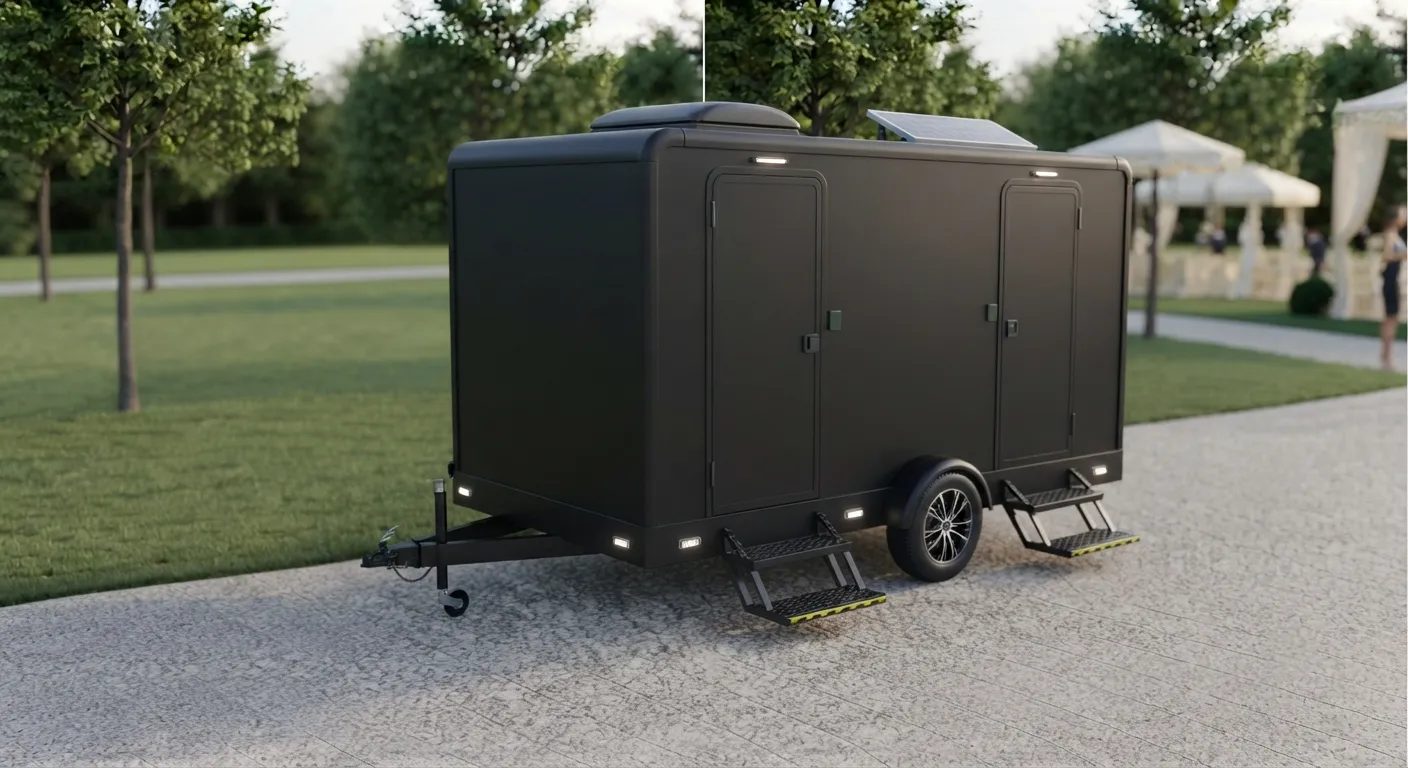
If the unit sits on private property, most Santa Clara homeowners and contractors will not need a permit at all. Placement in the public right of way, on a street or sidewalk, is different, and that needs confirming directly with the City of Santa Clara before delivery, since we have not verified a specific ordinance number for this page. The same caution applies to a dumpster placement permit: cost and process vary by street and by how long the container sits there, and our dumpster permit requirements page walks through what to check locally. Do not guess on this one. A misplaced unit on a public street can get tagged or towed, and that costs far more than a phone call to the city would have. If your project also needs curb space for a temporary fence rental or a storage container rental, ask about all three at once so you are not making three separate calls to the same department.
How many porta potties do I need and where do they go relative to each other?
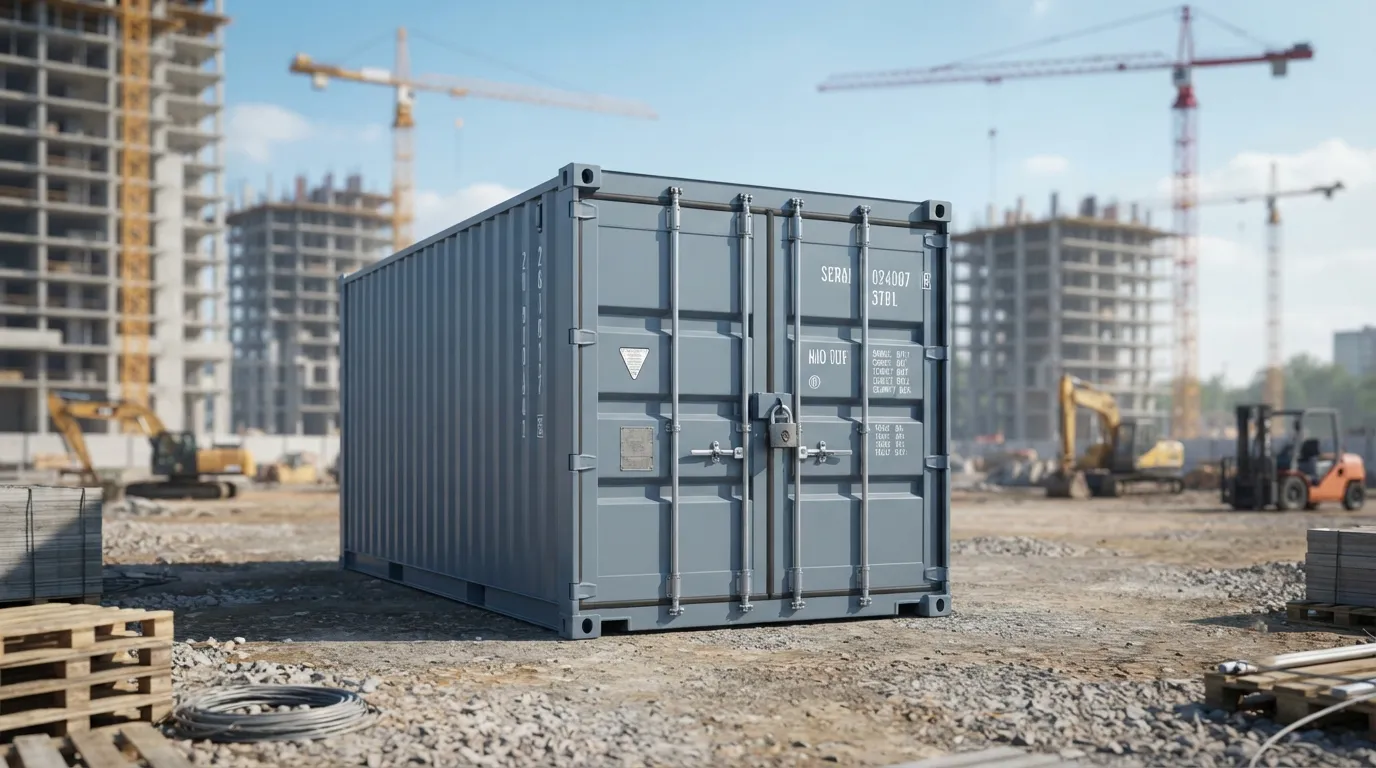
Worker count drives unit count before placement even matters. OSHA 1926.51(c)(1) sets the baseline for construction sites: one toilet for 20 workers or fewer, then one toilet and one urinal per 40 workers once you pass 20, and one per 50 once the crew hits 200 or more. Our how many porta potties do i need guide runs the math for your crew size. Once you know the count, spread units across the site rather than clustering them in one corner, especially on a site larger than an acre. ADA Standards section 213.2 requires that at least 5 percent of clustered single-user units be accessible, with a minimum of one, so plan an ada accessible porta potty into the layout from the start, not as an afterthought. Each accessible unit needs its own 60 inch turning circle inside, per ADA Standards section 304.3.1, so give it a little more room on the pad than a standard porta potty rental. For events, our festival restroom rental and concert restroom rental crews typically spread units along the perimeter near exits, not the center of the crowd.
Does placement change for restroom trailers, handwashing stations or septic tanks?
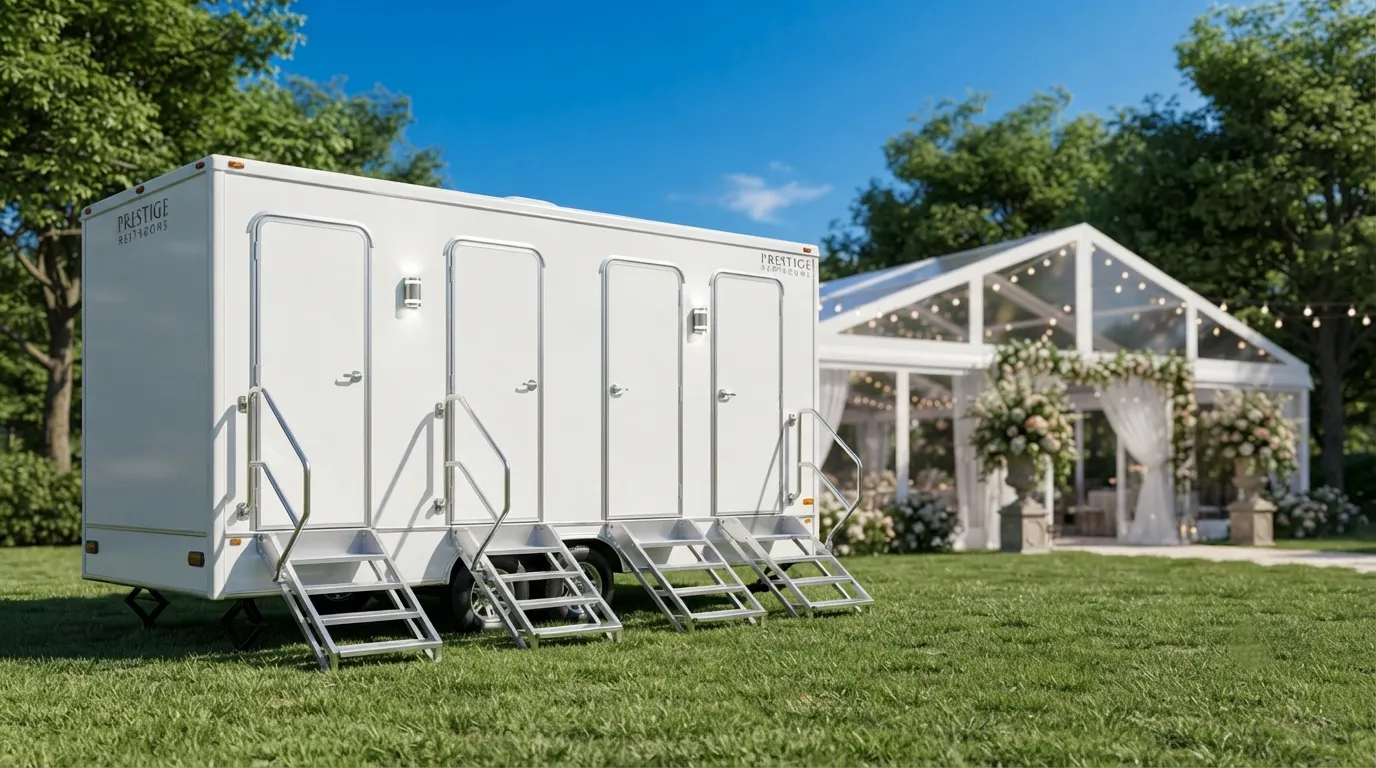
Yes, all three need different footing and access than a single toilet. A restroom trailer rental, whether it is a 2 stall restroom trailer or an 8 stall restroom trailer, needs level, compacted ground because it carries its own water and holding tanks and sits heavier than a standard unit. Handwashing stations pair well next to food service or paint work; OSHA 1926.51(f)(1) requires washing facilities specifically where crews apply paints, coatings, herbicides or insecticides, so place a handwashing station rental right at that work zone, not across the lot. If a part breaks, like an ozark river portable sink replacement parts issue on a self-contained hand station, our portable sink rental team swaps the unit rather than shipping parts, which is faster on an active site. Septic work is a different animal entirely: a residential tank is typically pumped every 3 to 5 years depending on size and household use, and our septic pumping service crew needs truck access similar to a placerville septic pumping service call, meaning a clear driveway path to the tank lid. Mobile office trailers have their own quirks too; if you are dealing with mobile office trailer replacement doors on a rented unit, call our mobile office trailer rental line before the site closes for the day.
Frequently asked questions
How far in advance should I schedule delivery for placement approval?
Book at least a few days ahead if the unit needs city right-of-way confirmation. Santa Clara sites without street placement can often be scheduled faster. Check our request a quote page for current lead times before your event or pour date locks in.
Can I move a porta potty myself after it is delivered?
Do not move it yourself. Tanks get heavy fast, and tipping one voids service and creates a real mess. Call contact and we will reposition it correctly during the next scheduled stop.
Do I need a permit for a unit on my own driveway?
Usually not, since private property placement typically skips the permit process entirely. Street or sidewalk placement is the trigger. Confirm with the city directly; see our porta potty permit requirements page for the general process.
What surface is best under a porta potty?
Concrete or asphalt is ideal, but compacted gravel or a level lawn works too. Avoid soft mud or noticeable slopes. Our porta potty rental crew can assess your pad during delivery.
How much clearance does a dumpster need for placement?
Plan on roughly 60 feet of straight clearance behind the truck for delivery. See dumpster sizes and dimensions for footprint details by size before you pick a spot.
Next step
Get a delivery date
Tell us the address, the dates and the headcount. We size the order and confirm the route.