
How Do Porta Potties Work?
The unit is basically two parts stacked on top of each other. The upper section is the stall itself, a molded shell about 44 by 48 inches on the ground and roughly 92 inches tall, with a seat, a door latch, and a vent stack that pulls odor up and out. Below that sits the holding tank. When someone uses it, waste drops straight into the tank, where a blue chemical deodorizer, the same kind of portable toilet chemicals used on job sites and campgrounds, breaks down solids and knocks back the smell. There is no flush, no water line, no drain. That is the whole trick, and it is why you can drop one on a gravel lot near a home renovation job site or out at a construction trailer with zero hookups. Our trucks come by on a set route to pump the tank, restock the chemical, and wipe the unit down. If you are trying to figure out how many you actually need for a crew or an event, our placement guide and our page on how many porta potties you need both walk through the math. For most jobs in Santa Clara, a standard rental covers it. For weddings or anything upscale, people usually step up to a deluxe flushable unit instead.
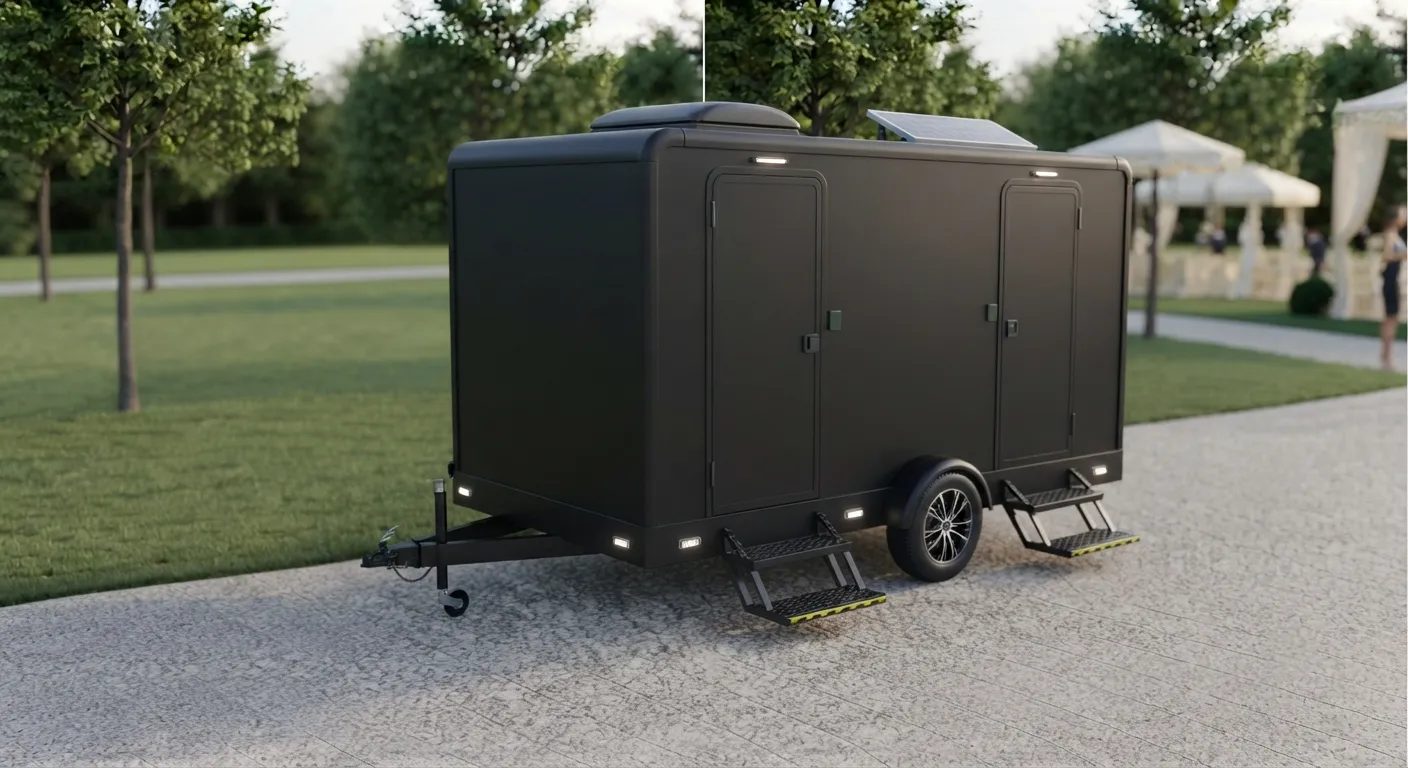
How Do Flushable Porta Potties Work?
A flushable, or deluxe, unit adds a small onboard freshwater tank and a foot pump or hand pump that pushes a rinse of water into the bowl after use, similar to how a portable sink rinses hands with a foot-pedal reservoir instead of a faucet. It still drains into the same sealed holding tank below, it just adds a rinse cycle so the bowl looks and feels closer to a real bathroom. These units cost more to rent, they weigh more to move, and they need topping off with fresh water on service days, but for a wedding at a Santa Clara venue or a corporate event, the upgrade is usually worth it. Our deluxe flushable porta potty page has full specs, and our restroom trailer rental options go a step further with multiple stalls and running water if you need something closer to a real bathroom bank. Camping units work the same basic way as a standard portable toilet, sealed tank, chemical treatment, no hookups, which is why they show up at campgrounds and remote sites with zero utilities nearby.
Why Do Porta Potties Need Chemicals?
The chemical is doing three jobs at once: breaking down solid waste, suppressing odor, and keeping the liquid from foaming when the truck pumps it out. Without it, a tank sitting for even a few days in warm weather turns unpleasant fast. This is different from septic tank cleaning chemicals used in a home system, which target bacteria balance in a buried tank rather than a portable unit's holding tank. On a construction site, OSHA 1926.51(c) sets the baseline for how many toilet facilities a crew needs, generally one unit for every 20 workers on-site, and that ratio matters because more workers using fewer units means faster tank fill and more frequent chemical treatment. A construction worker running to a porta potty on break does not want to find a unit that is already past capacity, so service frequency matters as much as the chemical itself. ANSI/PSAI Z4.3, the industry standard for portable sanitation, sets a baseline service interval of once per week for up to 10 users across a 40 hour week, though busy sites in Santa Clara often need more frequent stops than that. See our OSHA portable toilet requirements page for the full breakdown, and check how often porta potties are cleaned for service scheduling details.
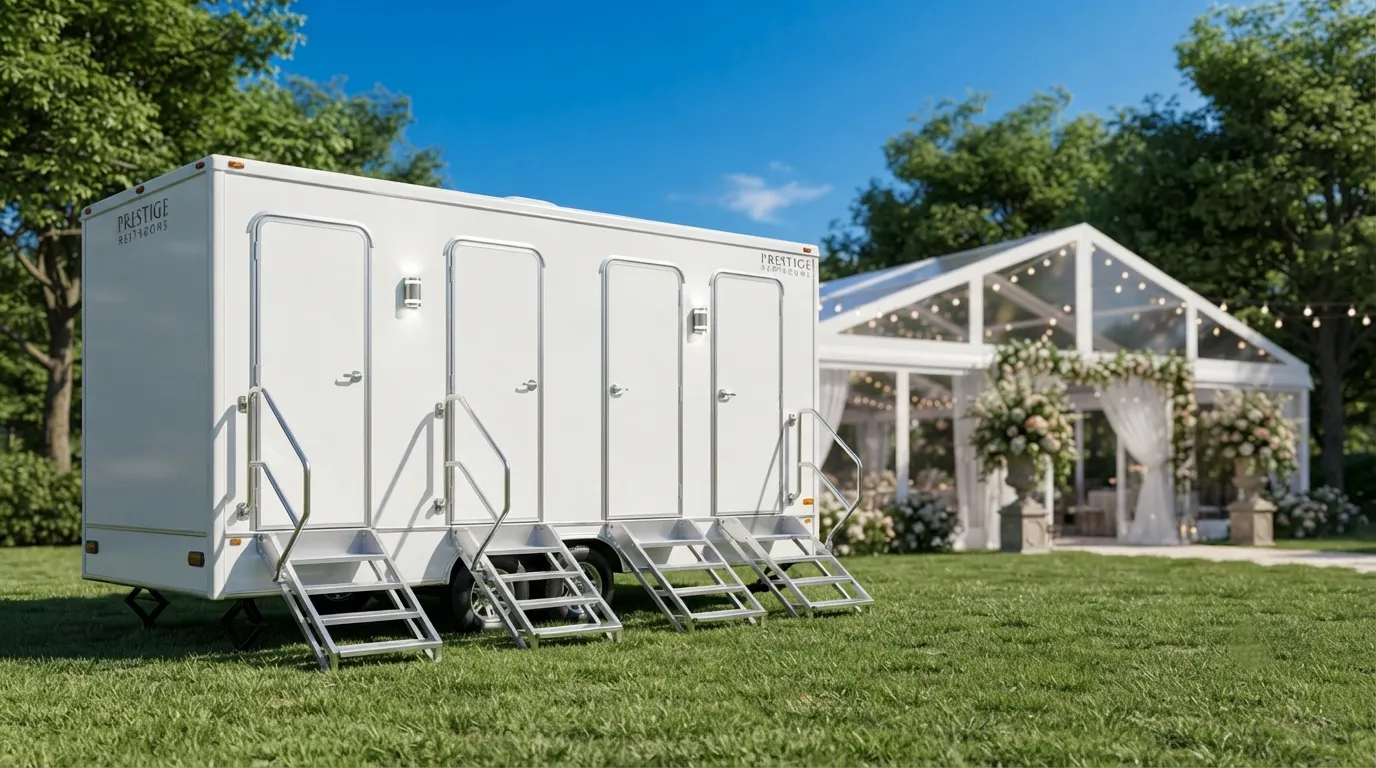
Do Porta Potties Smell, and How Is That Prevented?
Some odor is normal, especially in hot weather, but a well-serviced unit should not smell strongly. The chemical deodorizer does most of the work, the vent stack pulls gas up and away from the seat, and regular pump-outs keep the tank from ever sitting near full. Placement helps too, keeping units out of direct sun and away from building entrances cuts down complaints. Our do porta potties smell page covers this in more depth, and if you are placing units for an event, our event restroom rental team can walk the site with you. For accessible units, ADA Standards 213.2 requires that at least 5 percent of a cluster of single-user units be accessible, and those wheelchair units need a 60 inch turning circle inside per ADA Standards 304.3.1. Check our ADA accessible porta potty page for specs. Santa Clara Porta Pros delivers to job sites, weddings, and farms across the city, and for reference Cupertino sits about 7.1 miles southwest and Campbell about 6.7 miles south if you are coordinating a multi-site rental.
Frequently asked questions
How much does a standard porta potty rental cost?
Standard units run from about 100 to 350 dollars a day depending on duration and add-ons, with weekly rentals typically 130 to 500 dollars. Monthly rates run 125 to 325 dollars. See full pricing on our porta potty rental cost page or monthly porta potty rental page for long jobs.
How often does the tank need to be pumped?
For a standard job site unit, weekly service is the baseline under ANSI/PSAI Z4.3 for up to 10 users. Busier sites need two or three visits a week. Our septic pumping service page covers home tank pumping separately.
What is the difference between a porta potty and a portable sink?
A porta potty handles waste in a sealed tank with chemical treatment. A portable sink rental is a separate unit with a foot-pump reservoir just for handwashing, often required alongside toilets under 29 CFR 1910.141(d)(2).
Do porta potties need a permit in Santa Clara?
Placement in the public right of way needs confirming with the City of Santa Clara before delivery. Check our porta potty permit requirements page, and we can help sort out placement on private versus public land.
Can a porta potty freeze or overheat in extreme weather?
Yes, both extremes affect the chemical and the tank. Cold slows the breakdown process and heat speeds odor buildup. Our porta potty in winter page covers cold-weather service adjustments in detail.
Next step
Get a delivery date
Tell us the address, the dates and the headcount. We size the order and confirm the route.